Why Thanksgiving
The light whose illumination signaled the end of the Dark Ages shone on a Western Europe which was civilized in name only.
The plague had killed as many as 200 million people. The Hundred Years’ War claimed up to 3.5 million souls. Simultaneously, a “Little Ice Age” had descended on what was left of Europe, destroying crops and populations alike.
Facing such cataclysms, people clamored for a scapegoat.
The ruling powers obliged with the Inquisition.
The Inquisition proved to be a particularly virulent strain of church/state mixture. Over the next half-millennium, under its auspices, hundreds of thousands of Jews, Protestants, Muslims, witches, magicians, “gypsies”—anyone who dared to deviate from what the authorities asserted was proper belief—faced prosecution, with many imprisoned, tortured or killed. In 1492, King Ferdinand and Queen Isabella ordered the conversion or expulsion of all Jews from Spain, the Inquisition’s hotbed.
It is when religions are free to act according to their own scriptures that they invite our best.
Then, in 1534, England’s King Henry VIII established the Church of England, independent of Rome but very much not independent of the king. Soon, Parliament passed the first “Act of Supremacy,” a formal law which made the king the head of the Church of England. Other laws imposed harsh fines for failing to attend church and even death for denying the king’s religious supremacy.
Englishmen seeking freedom of religion (known as “Separatists” or “Pilgrims”) were caught between the hammer of the Inquisition on the continent and the anvil of the English crown at home.
They resisted, but the Separatists were running out of options. In 1618, the first contingent sailed from England for Virginia. Blown off course, beset by disease, only 50 of the original 180 survived. A second contingent left in 1620 and, in November of that year, landed at Cape Cod. They had arrived, but only about half of the original 102 survived the first winter’s ravages of disease and starvation.
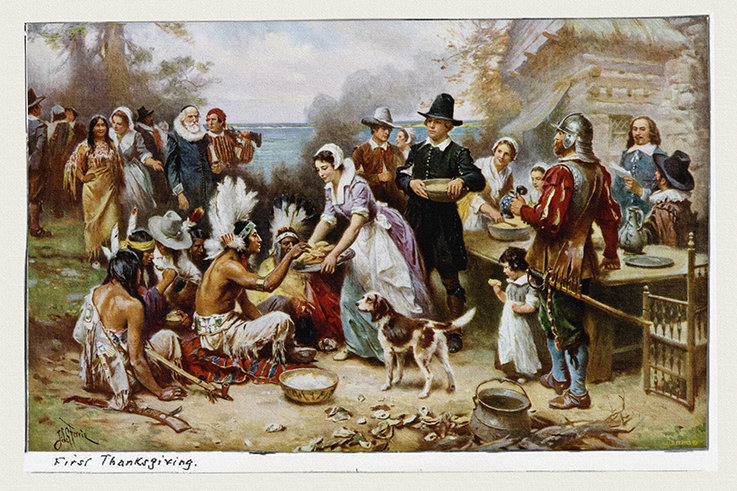
The survivors were glad to be alive. They had sought and received help from the local Native American population and in 1621 shared a harvest feast with them, a feast we now call “Thanksgiving.”
But the glow of the goodwill from that celebration was not enough to fully illuminate the shadows of prejudice and hate that had preceded it.
In 1619, Virginia’s assembly had passed laws effectively establishing the Church of England as the sole permitted religion. Taxes were levied and church attendance was deemed compulsory. It later became illegal for Quakers to refuse to have their children baptized or to hold religious meetings, while Catholics faced restrictions on public worship.
The Quakers found little solace up north. In Massachusetts, Quakers were flogged and imprisoned under the color of law. When that failed to deter, Puritans began cutting off ears and passed a law prescribing that Quakers’ tongues be bored with a hot iron. And when that failed to deter, the ultimate penalty was enforced. Between 1659 and 1661, four Quaker missionaries were hanged.
Soon, Maryland established the Church of England as the official state church, forbidding Catholics from voting, holding office or worshipping publicly. In 1685, French authorities enacted the Code Noir, banning all religious practices except Catholicism, and ordering the expulsion of all Jews from French Caribbean colonies. In 1700, New York also passed a law effectively prohibiting public Catholic worship. It took Georgia until 1732 to enact a charter that forbade the practice of Catholicism. By the time of the Constitution’s ratification, 11 of the 13 states had some form of religious test for holding public office. The infection had spread.
Every religion has benevolence at the core of its beliefs.
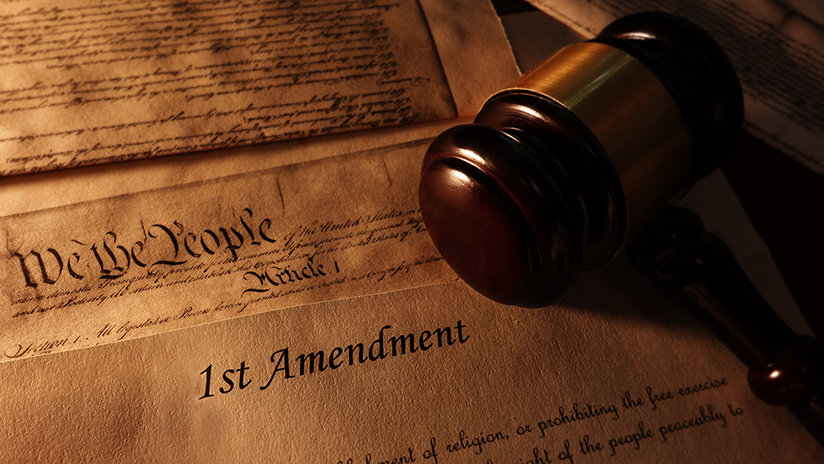
Then, in 1791, the Bill of Rights was ratified. Its First Amendment guaranteed the right of religious practice without the interference of the federal government. It proved to be potent medicine. It did not cure the new nation of hate, but it was a start.
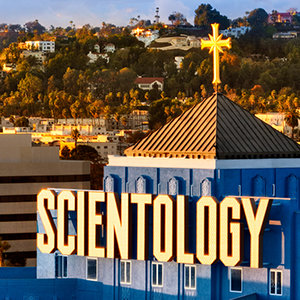
The light of that First Amendment has fostered the growth of a multitude of new religions here in America, including Latter-day Saints, Jehovah’s Witnesses, Seventh-day Adventists, and of course Scientology. It has nourished the world’s oldest religions as well: Islam, Hinduism, Buddhism, Sikhism—all have set down roots in this New World, largely free from the constraints of government entanglement. And therein lies the hope of man.
When religion becomes caught up in the control mechanisms of government, it is no longer really religion. It is when religions are free to act according to their own scriptures that they invite our best. Witness the Latter-day Saints who lined the roads leading out of Ukraine, offering succor to those displaced by war, or our own Volunteer Ministers swarming to the epicenter of disaster after disaster to help those afflicted.
Every religion has benevolence at the core of its beliefs.
Muslims call it Zakat—the giving of 2.5% of one’s surplus wealth to the poor and the needy. It is one of the five pillars of Islam.
Hindus, Sikhs, Buddhists and Jains all call it Dāna—the practice of generosity either through assistance provided to a destitute individual or philanthropy that benefits all. The Sikhs have an additional concept called Dasvandh—giving 10% of their income for the community good.
Hinduism also includes the practice of Karma Yoga—“unselfish action performed for the benefit of others.”
Judaism calls it Tzedakah—charitable giving.
Christianity calls it Charity, and it is one of the seven Christian virtues, the highest form of love.
This list could go on.
1791 heralded a new era. Under the First Amendment, religion was now free to stand on its own and answer to its own gods. Where sectarianism was once the accepted norm, now you are more likely to find churches offering to break bread with the spiritually or nutritionally needy, regardless of their faith.
The goodness of man is now on the rise. That is self-evident. And it is that for which I am giving thanks this year.