
-
HOME
-
WHAT IS STANDOur Mission Our Values Our Help Contact
-
WHAT WE FIGHT FORReligious Freedom Religious Literacy Equality & Human Rights Inclusion & Respect Free Speech Responsible Journalism Corporate Accountability
-
RESOURCESExpert Studies Landmark Decisions White Papers FAQs David Miscavige Religious Freedom Resource Center Freedom of Religion & Human Rights Topic Index Priest-Penitent Privilege Islamophobia
-
HATE MONITORBiased Media Propagandists Hatemongers False Experts Hate Monitor Blog
-
NEWSROOMNews Media Watch Videos Blog
-
TAKE ACTIONCombat Hate & Discrimination Champion Freedom of Religion Demand Accountability
The “Sect Filter” System
One of the most controversial features of Germany’s anti-Scientology campaign was the spread of so-called “sect filters”—declarations requiring individuals and businesses to distance themselves from Scientology in order to obtain contracts or professional opportunities.
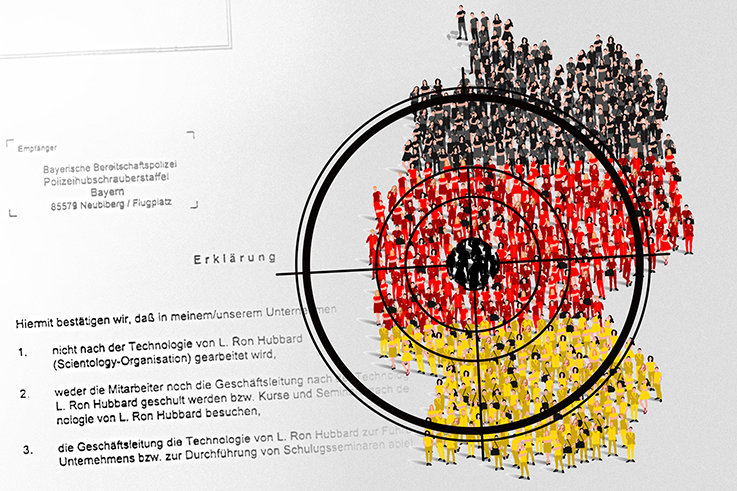
In practice, Scientologists were often forced to choose between their religious beliefs and their livelihoods.
Now, after nearly 30 years, Germany’s intelligence surveillance of Scientologists is ending.
Businesses feared exclusion if owners or employees were identified as Scientologists. Professionals faced pressure to sign statements disavowing association with Scientology. Religious identity itself became grounds for suspicion and economic harm.
Civil liberties advocates and international observers repeatedly criticized the practice as discriminatory and incompatible with principles of religious freedom.
Now, after nearly 30 years, Germany’s intelligence surveillance of Scientologists is ending without substantiating the allegations used to justify the climate in which these policies flourished.
The result is an unavoidable historical question: How did a democratic society normalize discrimination against citizens because of their religion for so long—while failing to prove the threat it repeatedly claimed existed?