-
HOME
-
WHAT IS STANDOur Mission Our Values Our Help Contact
-
WHAT WE FIGHT FORReligious Freedom Religious Literacy Equality & Human Rights Inclusion & Respect Free Speech Responsible Journalism Corporate Accountability
-
RESOURCESExpert Studies Landmark Decisions White Papers FAQs David Miscavige Religious Freedom Resource Center Freedom of Religion & Human Rights Topic Index Priest-Penitent Privilege Islamophobia
-
HATE MONITORBiased Media Propagandists Hatemongers False Experts Hate Monitor Blog
-
NEWSROOMNews Media Watch Videos Blog
-
TAKE ACTIONCombat Hate & Discrimination Champion Freedom of Religion Demand Accountability
All Faiths, One Spark: Celebrating World Religion Day
When I was training to become a Scientology minister, my final course requirement was to study the history of religion itself—starting with the ancient Chinese traditions down through Taoism, Confucianism, the Vedas, Hinduism, Buddhism, Judaism and eventually Christianity and Islam.
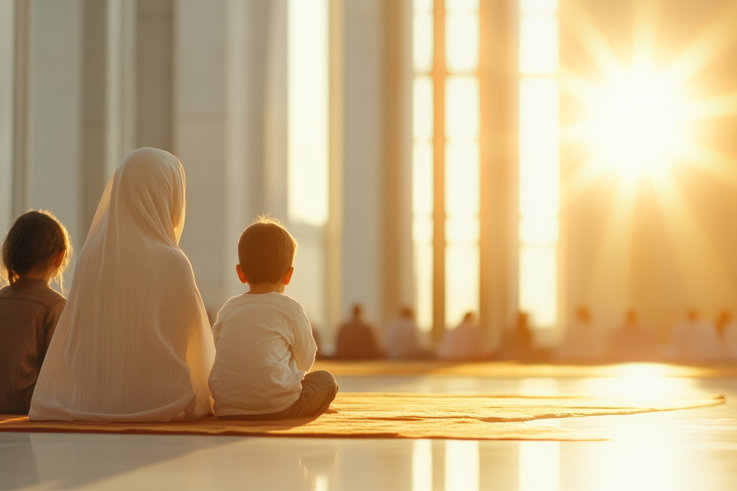
Looking at this vast human panorama through the lens of history, it was clear that there was a fundamental and universal concept at work here: Man is not his body. He is a spirit. He can be free of the binds of the physical universe.
I was standing, if you will, on the shoulders of the millions of spiritual men and women who had preceded me, and I vowed to do my ancestors proud.
That concept was like a spark. It was carried by the shamans, priests, bodhis and holy men as they journeyed the trade routes of the old world. Every few centuries, that spark would catch with a new messiah and a new religion would alight, offering a beacon to guide men to greater freedom.
But the spark was always the same.
From that perspective, it was clear to me that Scientology is the culmination of that long historical record. I was being entrusted with a proud and VERY old tradition. I was standing, if you will, on the shoulders of the millions of spiritual men and women who had preceded me, and I vowed to do my ancestors proud.
So, what relevance does this have to World Religion Day? First celebrated by the Baháʼí Faith in 1950, the day is a means of emphasizing unity amongst the many diverse religions of the world. It seeks to end the hostility and misunderstandings between those of different beliefs and remind us all of the similarities that every faith shares.
That is exactly where my ministerial studies delivered me.
The Baháʼí’s annual celebration is now observed in many countries. Many religions, including my own, embrace religious tolerance and unity as part of their core beliefs.
In his book, The Way to Happiness, L. Ron Hubbard lists 21 precepts. “Respect the Religious Beliefs of Others” is precept 18. In that precept, Ron states (in part):
“Tolerance is a good cornerstone on which to build human relationships. When one views the slaughter and suffering caused by religious intolerance down all the history of Man and into modern times, one can see that intolerance is a very non-survival activity.
“Religious tolerance does not mean one cannot express his own beliefs. It does mean that seeking to undermine or attack the religious faith and beliefs of another has always been a short road to trouble.”
“‘Faith’ and ‘belief’ do not necessarily surrender to logic: they cannot even be declared to be illogical,” he continues. “They can be things quite apart.
“Any advice one might give another on this subject is safest when it simply asserts the right to believe as one chooses. One is at liberty to hold up his own beliefs for acceptance. One is at risk when he seeks to assault the beliefs of others, much more so when he attacks and seeks to harm them because of their religious convictions.”
He concludes the precept with these words: “Men without faith are a pretty sorry lot. They can even be given something to have faith in. But when they have religious beliefs, respect them.”
I encourage you to celebrate World Religion Day by learning more about a religion, any religion, and by coming to your own realization that we are each the heirs to a long, rich tradition of rebellion against the chains of the material world—and that all of us, members of every faith, are brothers-in-arms in that revolt.
World Religion Day is a chance to embrace one another as the spiritual siblings that we truly are.