
-
HOME
-
WHAT IS STANDOur Mission Our Values Our Help Contact
-
WHAT WE FIGHT FORReligious Freedom Religious Literacy Equality & Human Rights Inclusion & Respect Free Speech Responsible Journalism Corporate Accountability
-
RESOURCESExpert Studies Landmark Decisions White Papers FAQs David Miscavige Religious Freedom Resource Center Freedom of Religion & Human Rights Topic Index Priest-Penitent Privilege Islamophobia
-
HATE MONITORBiased Media Propagandists Hatemongers False Experts Hate Monitor Blog
-
NEWSROOMNews Media Watch Videos Blog
-
TAKE ACTIONCombat Hate & Discrimination Champion Freedom of Religion Demand Accountability
After 30 Years of Failure, Germany’s OPC Still Refuses to Admit Scientologists Were Never the Threat It Claimed
Germany’s Office for the Protection of the Constitution has now ended nearly 30 years of nationwide Scientology surveillance without establishing the extremist threat it repeatedly used to justify the campaign.
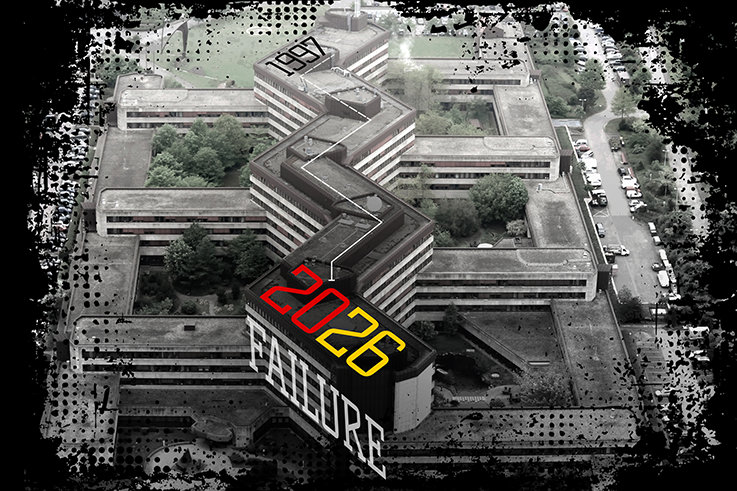
Yet even now, after decades of investigations, intelligence operations and extraordinary scrutiny, the OPC still refuses to publicly acknowledge the obvious conclusion:
The allegations never materialized because they were false from the beginning.
Not one terrorist act.
Not one violent conspiracy.
Not one extremist network.
Not one campaign against Germany’s democratic order.
And still the OPC attempts to preserve suspicion rather than admit failure.
The consequences of these accusations were never theoretical.
That contradiction reveals the true nature of what this campaign became.
Because after 30 years without proving the threat it claimed existed, an agency genuinely guided by evidence would acknowledge that reality plainly and publicly.
Instead, the OPC quietly retreats while continuing to imply Scientologists remain suspect despite decades without proof of extremist activity.
For Scientologists in Germany, that refusal matters deeply.
Because the consequences of these accusations were never theoretical.
People lost careers.
Families endured stigmatization.
Children faced discrimination.
Businesses and professionals were excluded because of their religion.
And now, after all these years, the agency responsible for fueling that climate still cannot bring itself to admit that the central allegations collapsed under the weight of their own emptiness.
That is not the conduct of an institution protecting democracy through objective findings.
It is the conduct of an institution attempting to protect itself from the implications of its own failure.


