Religious Freedom Is a Human Right—Not a Talking Point
I’m not a Christian, but I’m writing this in defense of Christians anyway.
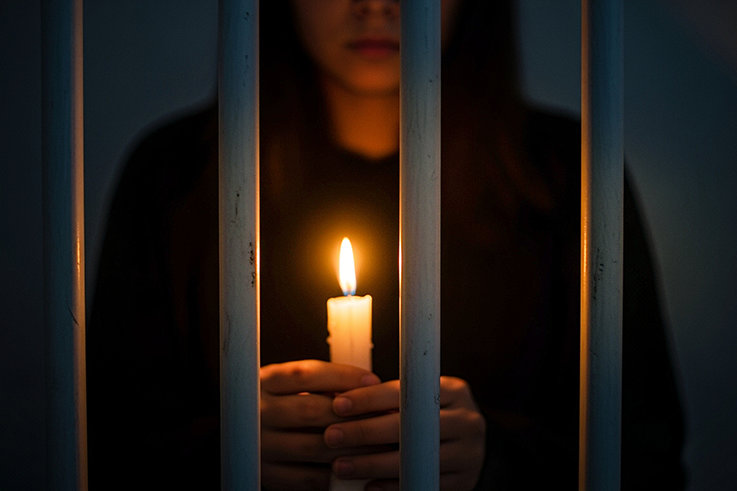
Photo by Sinchan/Adobe Stock
Freedom of religion is a human right. A right that only protects people who share your beliefs isn’t a right. It’s a membership perk. Religious freedom means defending someone else’s faith as fiercely as you’d defend your own, especially when it isn’t your own.
And I do think all faiths are worth defending. The ideas at the heart of every major religion, like ethics, morality, community, and the conviction that human life means something beyond the material, aren’t optional extras. Strip them away and you don’t get a more enlightened society. You get a colder, more barbaric one.
Religious persecution is as old as civilization. You’d think by the 21st century we’d have moved past it. We haven’t. And when one group’s right to believe freely is violated, it isn’t just their problem. Rights don’t work in isolation. They hold together, or they fall apart together.
So I’m writing this not as a Christian, but as someone who thinks human rights deserve defending, whether or not they’re trending.
The Crisis the Media Won’t Cover
While the world scrolls past, a humanitarian catastrophe is unfolding across Africa. In Nigeria, over 19,000 Christians were killed from 2019 to 2025—and the genocide still continues today. Thousands more have been kidnapped by groups like Boko Haram and ISWAP.
In Mozambique, over 30 Christians were beheaded in September 2024, their churches and homes burned to the ground. In the Democratic Republic of the Congo, 70 Christians were beheaded in a single attack in February 2025. Across sub-Saharan Africa, more than 16 million Christians have been forcibly displaced from their homes.
And yet, for the most part, the media has remained silent.
When Speaking Up Becomes Controversial
Last November, a female rapper spoke at the United Nations about the persecution of Christians in Nigeria. She said something that should be uncontroversial: “No group should ever be persecuted for practicing their religion. We don’t have to share the same beliefs in order for us to respect each other.”
The backlash was swift and brutal. Not because she got her facts wrong. Not because she was minimizing other victims. But because she thanked a controversial political figure for addressing the issue.
When the media frames defending persecuted citizens for their faith as a “political issue,” they manipulate us into complicity with atrocities.
Think about that for a moment. A woman used her platform to draw attention to thousands of people being murdered for their faith—and the response was outrage over her political associations. Videos went viral of clubgoers booing her music and clearing dance floors the moment her songs played. Petitions calling for her deportation gathered over 100,000 signatures.
This is what happens when we let politics poison everything. When the media frames defending persecuted citizens for their faith as a “political issue,” they manipulate us into complicity with atrocities.
A Global Crisis Beyond Africa
Religious persecution isn’t limited to one continent or one faith:
North Korea remains the most hostile place for Christians globally, where any independent religious activity is seen as a threat to the regime.
China has intensified its crackdown with new regulations controlling online religious activity, arresting believers and shutting down house churches that don’t conform to communist ideology.
India arrested over 2,000 Christians in 2024, with anti-conversion laws in 12 states restricting religious freedom.
Pakistan weaponizes blasphemy laws against Christian minorities, with false accusations often resulting in mob violence or death sentences.
Myanmar wages what activists call a “slow genocide” against Christian ethnic minorities like the Chin and Kachin.
Sudan’s civil war has displaced 11 million people, with Christians facing violence for both their faith and ethnic identity.
More than 380 million Christians worldwide face high levels of persecution. Rohingya Muslims in Myanmar, Uyghurs in China and religious minorities around the world face similar horrors.
When the Media Decides Who Deserves Your Outrage
If you oppose religious freedom because a politician you disagree with supports it, you’ve abandoned your principles. And if you only care about human rights when the media tells you to care, you’re being manipulated.
We’ve seen this play out in disturbing ways. In March 2012, a 30-minute documentary called Kony 2012 was uploaded to YouTube. Within a week it had been viewed more than 100 million times, making it the most viral video in internet history. Celebrities shared it. Politicians responded. People bought awareness kits. For about three weeks, stopping Joseph Kony—a Ugandan warlord who had spent decades abducting children and forcing them to become soldiers—was the most important cause in the world. Then the feed moved on. Within a month it was over. Kony was never caught, children are still being abducted and the vast majority of people who shared that video couldn’t tell you a single thing about Uganda today.
So where are those #Kony2012 influencers now? There’s no shortage of suffering worth caring about. The question is why you’ve never heard of most of it. There are mass atrocities happening right now around the world: Rohingya Muslims, Uyghur Muslims, Christians in Nigeria and countless others. But these aren’t fashionable causes, so there’s no trending hashtag, celebrity shares or wall-to-wall media coverage. The media didn’t decide you should care—and you didn’t.
Here’s the uncomfortable truth: If you care about religious freedom and human rights only when it’s trending, you don’t actually care. You’re a pawn of the algorithm.
The Principle That Transcends Politics and Trends
Religious freedom is enshrined in the Universal Declaration of Human Rights and the UN International Covenant on Civil and Political Rights. It’s not a left issue or a right issue. It’s not something you adopt when it makes you look good on social media. It’s a human right.
Murdering people for their faith isn’t a political prerogative. It’s a moral obscenity. Whether it’s Christians in Nigeria, Muslims in Myanmar, Jews anywhere or any other group—if you’re willing to look away because the media isn’t telling you to care, you’re complicit.
Standing Up for What’s Right
So what can be done about religious persecution, this millennia-old problem? The thing not to do is become apathetic about it and write it off as human nature. Something can always be done about it.
That’s why STAND League exists. That’s why Scientologists around the world engage in humanitarian efforts, from disaster relief to global literacy programs, and from drug education to drug rehabilitation.
Organizations around the world are working to educate people on their fundamental human rights. United for Human Rights, sponsored by the Church of Scientology, has partnered with thousands of organizations globally to provide human rights education in over 17 languages.
Their work spans continents:
In Mexico, they’ve reached millions through public service announcements, working with officials and educators to make human rights education a reality.
In Taiwan, human rights education programs have reached over 180,000 students, with materials distributed to hundreds of schools.
In India, where religious freedom violations are severe, they’ve distributed tens of thousands of human rights materials and worked with hundreds of schools to educate the next generation about tolerance and fundamental rights.
The Choice Before Us
Religious freedom isn’t about whether you personally believe in God. It’s not about whether you like a religion or find it “fashionable.” It’s about the fundamental right of every human being to believe what they choose without fear of violence or persecution.
Standing up for persecuted Christians doesn’t make you anti-Muslim—it makes you pro-human. The same principles that protect Christians in Nigeria should protect Muslims in Myanmar, Jews in America and Europe, religious minorities in China, Scientologists in Australia, and everyone, everywhere.
We live in a time when 16 million people—in one region on one continent—have been driven from their homes because of how they pray. When thousands are murdered each year for their beliefs. When the media would rather ignore mass atrocities than risk political inconvenience—or worse, when they turn human rights into a trend that comes and goes with the news cycle.
The question is: What will you do about it?
Regardless of your politics. Regardless of your faith. Regardless of whether it’s trending, religious freedom is a human right.
And it’s time we all stood up to defend it.
Watch the video and learn more about standing up for human rights around the world: scientology.org/how-we-help/human-rights/